Reading a Search Console Links report without panicking
A sudden list of unfamiliar domains linking to your site looks alarming in Google Search Console. Most of the time it isn't — but you do need to be able to explain every one of them. Here's how we actually read that report.
 Rebeka SziliCo-founder6 min read
A client forwards a screenshot of their Search Console Links report, unfamiliar domains listed, and asks the only question that matters to them: is this bad? It's one of the more common messages we get, and the honest answer is almost always more boring than the panic suggests — but "almost always" isn't "always," so it's worth knowing how to actually tell the difference instead of guessing.
What a backlink actually is
A backlink is just another site linking to yours. That's the whole definition — it says nothing on its own about whether it's good, bad, earned or bought. Search engines treat backlinks as a signal of trust roughly the way a citation works in an essay: a link from a credible, relevant source counts for something; a link from an unrelated, low-quality domain mostly doesn't, and a pile of obviously manipulative links can actively hurt you. The number alone tells you almost nothing. The source of each one does.
The question that actually matters
Can you explain where every new link came from? That's the real test, and it's a lower bar than it sounds. If you've shipped a new project — for a client, or for your own portfolio — and that project's site includes a legitimate "built by" attribution link back to you, that's a new backlink, and it's a completely healthy one. It's explainable in one sentence, it's relevant (a web studio linking from a website it built), and it didn't come from anywhere resembling a link farm. Contrast that with the actual warning signs: links from domains in languages or industries with no connection to your business, obviously automated-looking anchor text, or a sudden pile of links from sites that look abandoned. Those are worth investigating. A handful of new, on-brand attribution links from your own recent work is not.
Why a new site's data looks noisy by default
A site that's only been live a few months, especially one going through fast UI iterations, will show choppier Search Console data than an established one — and that's expected, not a symptom of something wrong. Search engines are still working out how often to recrawl you, which pages matter most, and how to treat changes that are happening faster than they can fully index. Read week-to-week swings on a young site as "the data is still catching up to reality," not as a verdict.
Three questions worth asking before you panic
- Can I name, in one sentence, why each new domain is linking to me?
- Does the anchor text look like something a person would naturally write, or something built to game a keyword?
- Is this a handful of relevant, explainable links, or a sudden unexplained pile from unrelated domains?
If the honest answers are "yes," "natural" and "explainable," you almost certainly don't have a problem — you have a report that looks more dramatic than the reality underneath it, which is true of most things in Search Console.
What we actually tell clients
Most SEO anxiety we see isn't caused by a real problem. It's caused by reading a normal, healthy signal with the same alarm you'd bring to a real one, because the dashboard doesn't tell you which is which — you have to know enough to tell them apart yourself. That's most of what we're actually being asked to do when a client forwards a screenshot: not fix something, but tell them honestly whether there's anything to fix at all.
The service behind this post
Performance marketing
Questions worth answering directly
- Is it bad if a lot of new backlinks show up in Search Console all at once?
- Not by itself. A sudden cluster is only a problem if you can't explain where it came from — a product launch, a press mention, or a batch of new projects with legitimate attribution links back to you can all produce exactly that pattern, and all of them are healthy. The volume alone tells you nothing; the explainability of each source is what actually matters.
- What's the real difference between a healthy backlink and a spammy one?
- A healthy one is relevant and explainable in one sentence — a site you built linking back to you, a genuine mention, a partner's page. A spammy one usually comes from an unrelated domain, in an unrelated language or industry, with anchor text that reads like it was written to target a keyword rather than written by a person. If you can't explain why a specific site is linking to you, that's the one worth investigating, not the whole report.
- Why does a brand-new website's Search Console data look unstable even when nothing is wrong?
- Because search engines are still working out how often to recrawl the site and how to treat changes that are happening faster than they can fully index — which is exactly what a new site going through fast UI iterations looks like from the outside. Choppy week-to-week numbers on a young site usually mean the data is still catching up, not that something has gone wrong.
Also available in Hrvatski · Magyar
Rebeka Szili
Co-founder
Your point of contact from first call to launch, and the person who keeps projects moving once the building starts.
Connect on LinkedInHave a project in mind?
More from the Blog

AI in practice
AI product photography that doesn't look like AI
Most AI product photography looks fake for a specific, fixable reason: the model is allowed to regenerate the product, not just the scene around it. Here's the actual discipline behind doing it properly.
Oct 19, 2026 · 6 min read
Engineering
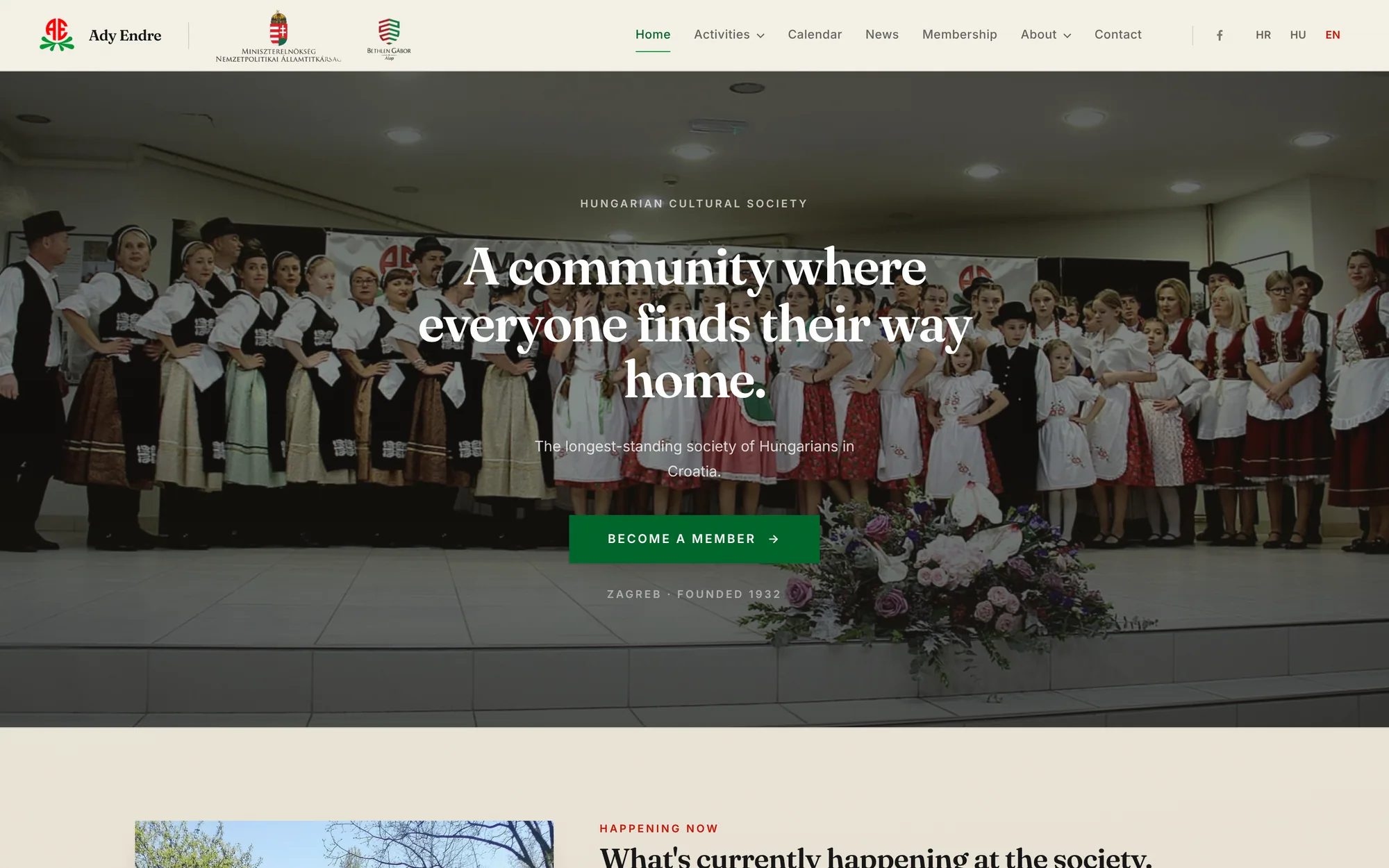
Ady Endre: a CMS built to outlast us
Zagreb's oldest Hungarian cultural society needed its 94-year archive online, in three languages — and a system its own volunteer staff could run without us. This is our one real client project, and the three technical calls that mattered most.
Oct 18, 2026 · 7 min read
Case notes
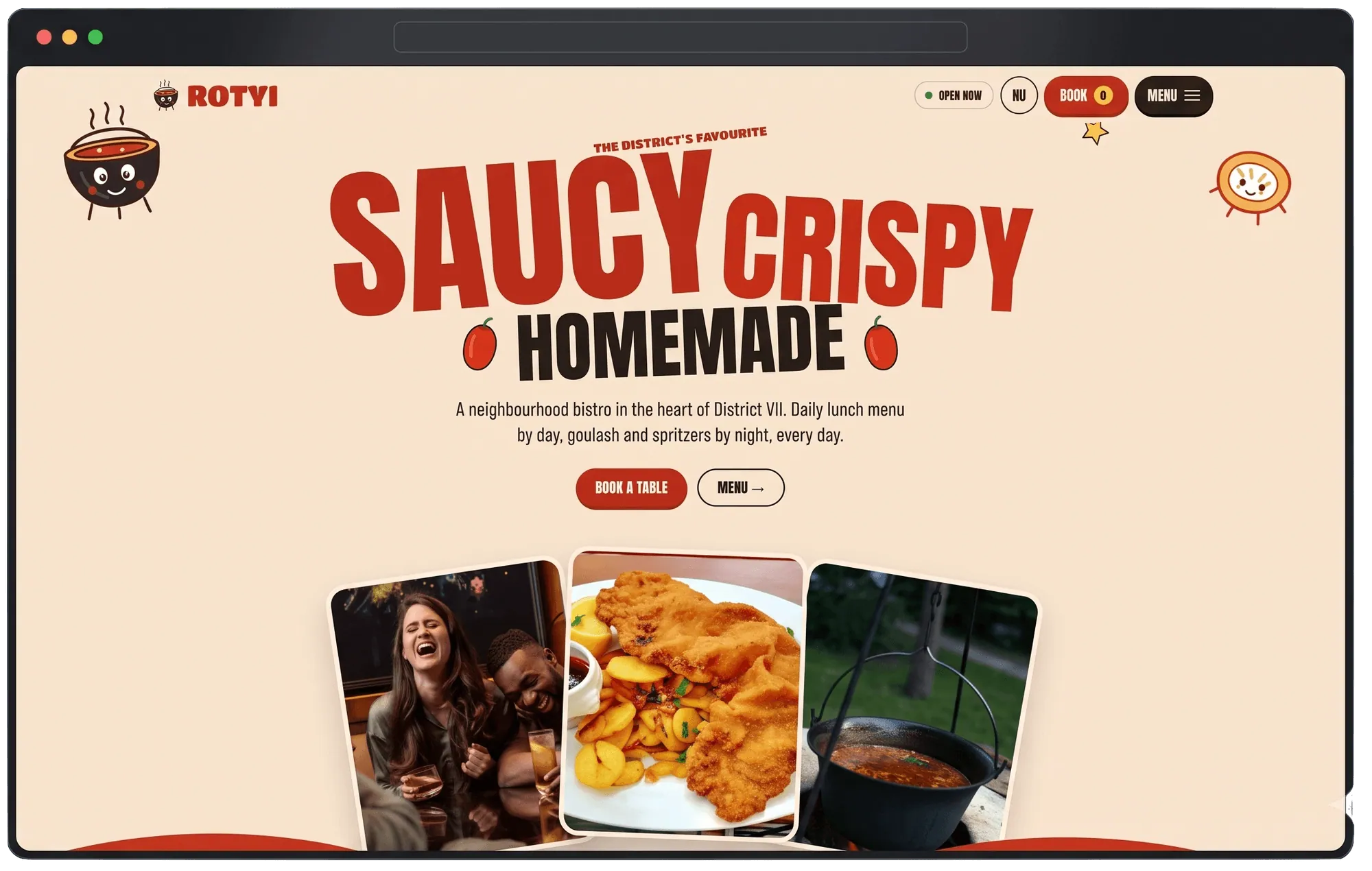
Rotyi Bistro: a menu that gets out of its own way
Small kitchens live on Instagram, but their websites are often a PDF nobody opens. We wanted to see what happens when the website works as hard as the Instagram feed does.
Oct 16, 2026 · 5 min read